


A Micro-Guide to Svaneti's Stone Towers, Georgia
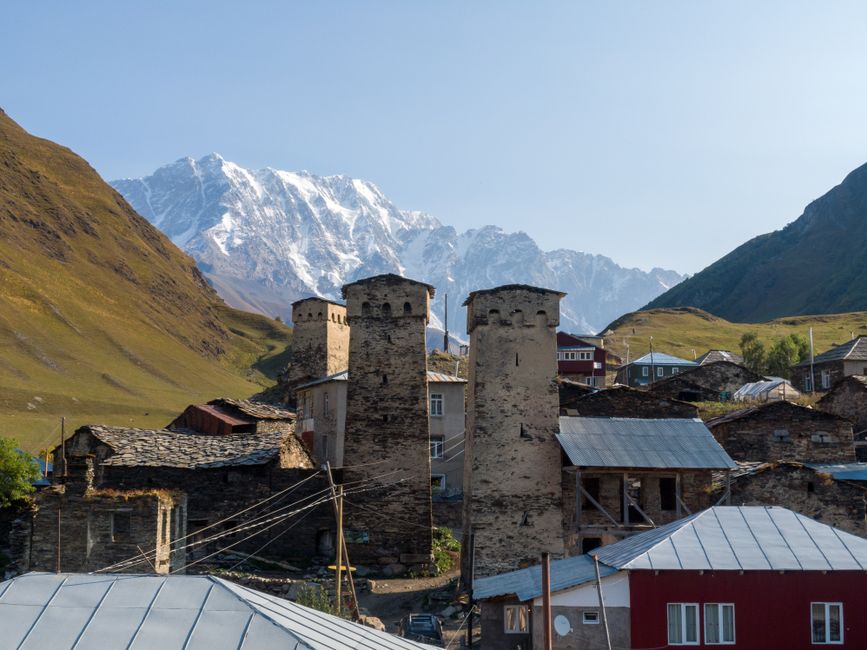
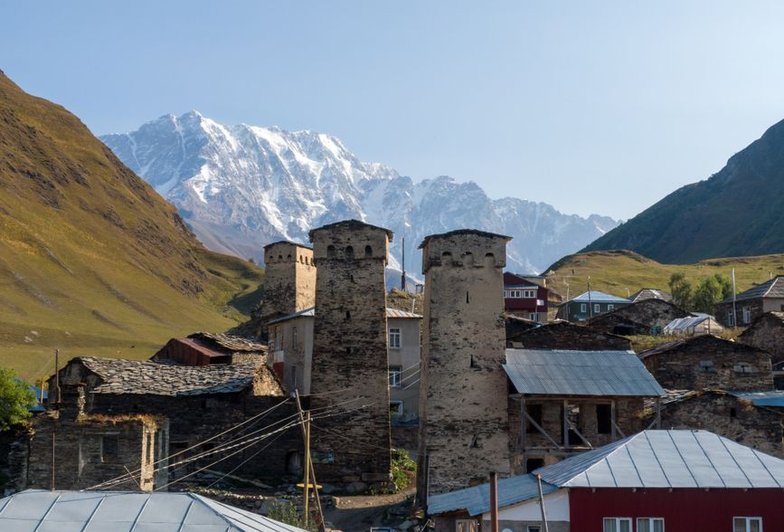
The road from Zugdidi to Mestia climbs for hours through a landscape that keeps changing its mind — river gorge, then pine forest, then bare rock, then suddenly a valley floor scattered with towers that look like they were carved from the mountains themselves. These are the Svan towers, defensive stone structures built between the ninth and thirteenth centuries, and in villages like Ushguli they still outnumber the cars.
Svaneti is not undiscovered — it has been on the trekking map for years — but the upper villages still feel genuinely remote, especially outside July and August. In June, wildflowers flood the meadows. In October, the beech forests turn copper and the tourists thin out. Winter is a different world entirely, with snow blocking the pass for months and the towers standing like chess pieces in a white field.
Where to Base Yourself
Mestia is the practical hub: guesthouses, a small museum, a few cafés, and the best chance of reliable wifi. But the villages are the point. Ushguli, a UNESCO site at around 2,100 meters, is the classic destination and worth the bumpy drive, though it can feel crowded in peak season. For something quieter, consider Adishi or Iprari — smaller, fewer guesthouses, and trails that leave straight from your door.
Guesthouses in the region are usually family-run, with dinner served at a long table: khachapuri, kubdari (Svan meat pie), lobio, and a glass of chacha that will absolutely sneak up on you. Bring cash in Georgian lari; card acceptance is patchy at best outside Mestia. And learn a few words of Georgian — gamarjoba goes a long way, and Svans are quietly proud of their distinct language and traditions.
Trekking and Tower Etiquette
The classic trek from Mestia to Ushguli takes about four days, sleeping in village guesthouses along the way. The trails are well marked in summer but weather can turn fast; pack layers, a proper rain jacket, and sturdy boots. The Chalaadi Glacier walk from Mestia is a good half-day warm-up, and the Koruldi Lakes above town offer a big view for a moderate climb.
As for the towers: many are private property, some are unstable, and a few still belong to families who use the lower floors for storage. Don't climb them without permission, and don't assume a tower is abandoned just because it looks it. The best way to see inside one is to ask your guesthouse host — chances are they know a family, and chances are that family will be happy to show you the smoke-blackened interior and tell you stories about who built it and why. Svan hospitality is real, but it's earned with patience and a little humility.




In the Caucasus highlands of Georgia, medieval stone towers still stand watch over villages that see more snow than tourists.
Bolivia's Salar de Uyuni gets the crowds, but a smaller salt flat in the high Andes offers the same mirror effect with a fraction of the visitors.
Off the Kenyan coast, a small island with no roads, no cars, and no hurry offers a slower version of the Swahili coast.
In a small Saharan oasis town, a hand-built library of old manuscripts has become an unlikely reason to make the long journey.
Skip the pyramid crowds and wander the sleepy backstreets of a Mexican town built on layers of forgotten civilizations.